|
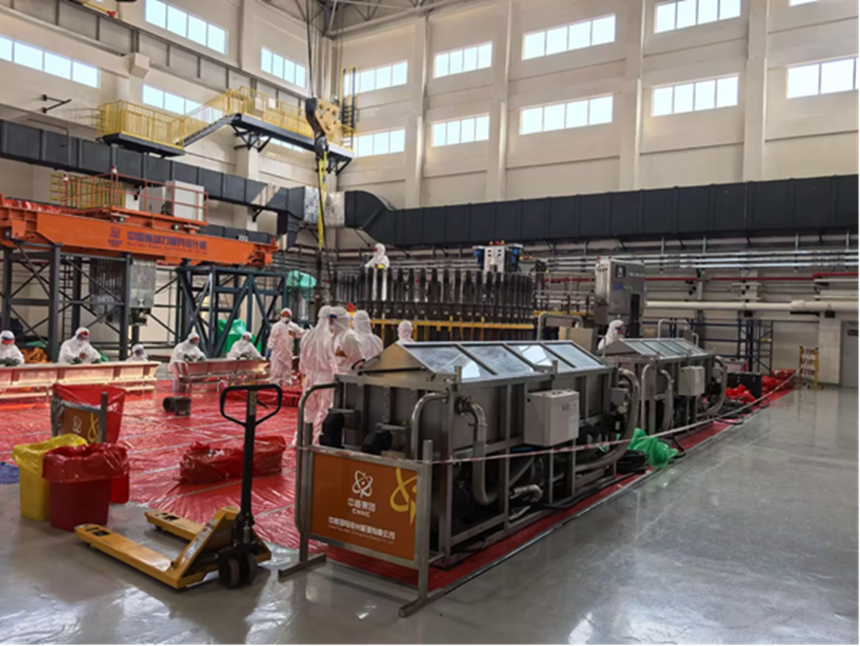
Powering the Intelligent Upgrade of Nuclear Power Plant Maintenance —— Full-condition Application of Raymond-CBE's Main Bolt and Main Hole Cleaning Machines Successfully Completed in Zhangzhou NuclearRecently, the RPV main bolt/main nut high-pressure water jet cleaning robot and the RPV main bolt hole cleaning robot, independently developed by Raymond-CBE, have successfully completed full-condition application in the Zhangzhou Nuclear Power Plant Unit 101 overhaul. This application has fully validated the stability, safety, and efficiency of the equipment under actual nuclear island operating conditions, strongly demonstrating the company's solid technical strength and engineering capabilities in the field of intelligent cleaning equipment for nuclear power plants.
In traditional nuclear power plant overhauls, the cleaning of reactor pressure vessel main bolts has long relied on manual operations, presenting prominent challenges such as high radiation exposure to personnel, inconsistent cleaning quality, high labor intensity, and low efficiency. Addressing these industry pain points, Raymond-CBE has successfully developed the RPV main bolt/main nut high-pressure water jet cleaning robot, aiming to provide safe, efficient, and convenient intelligent cleaning equipment for the nuclear power sector.
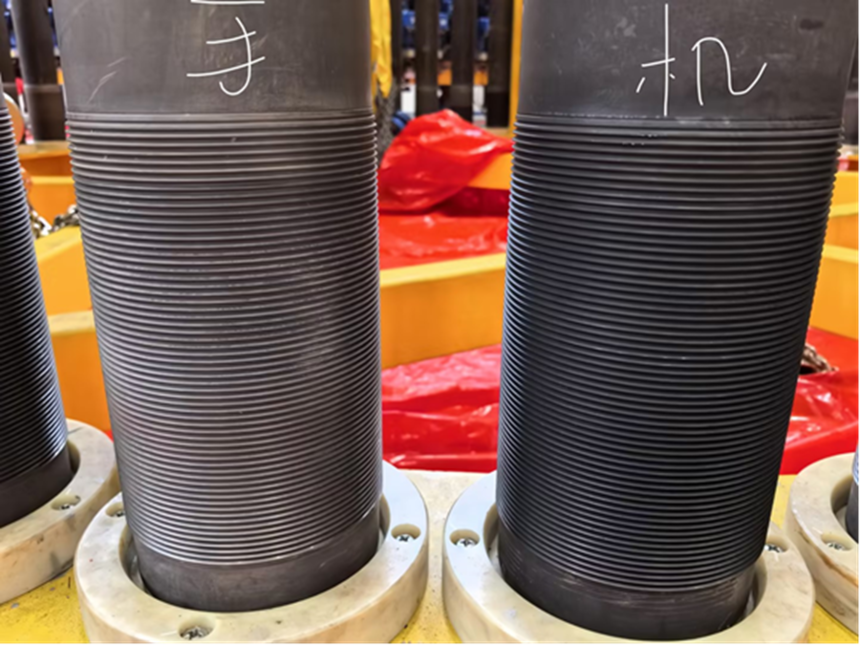
This image shows a comparison of the cleaning results between manual cleaning (left) and our company's main bolt cleaning machine (right). During the Zhangzhou Nuclear Power Plant Unit 101 overhaul at the AC workshop, this equipment fully automatically completed a series of processes including installation and removal, cleaning, air drying, and dirt collection for main bolts/main nuts. It employs high-pressure water jet non-contact deep wet cleaning of thread surfaces, thoroughly removing anti-seize compounds, rust, and other contaminants while effectively protecting the phosphating layer on the bolt surface. The operation produces no dust emissions and generates no aerosols. The equipment runs fully automatically throughout the process, cleaning a single set of main bolts or main nuts in no more than 12 minutes, demonstrating high cleaning efficiency. Additionally, the equipment's monitoring interface utilizes digital twin technology, providing real-time mapping of the cleaning process dynamics, allowing operators to intuitively grasp the cleaning status at every stage.
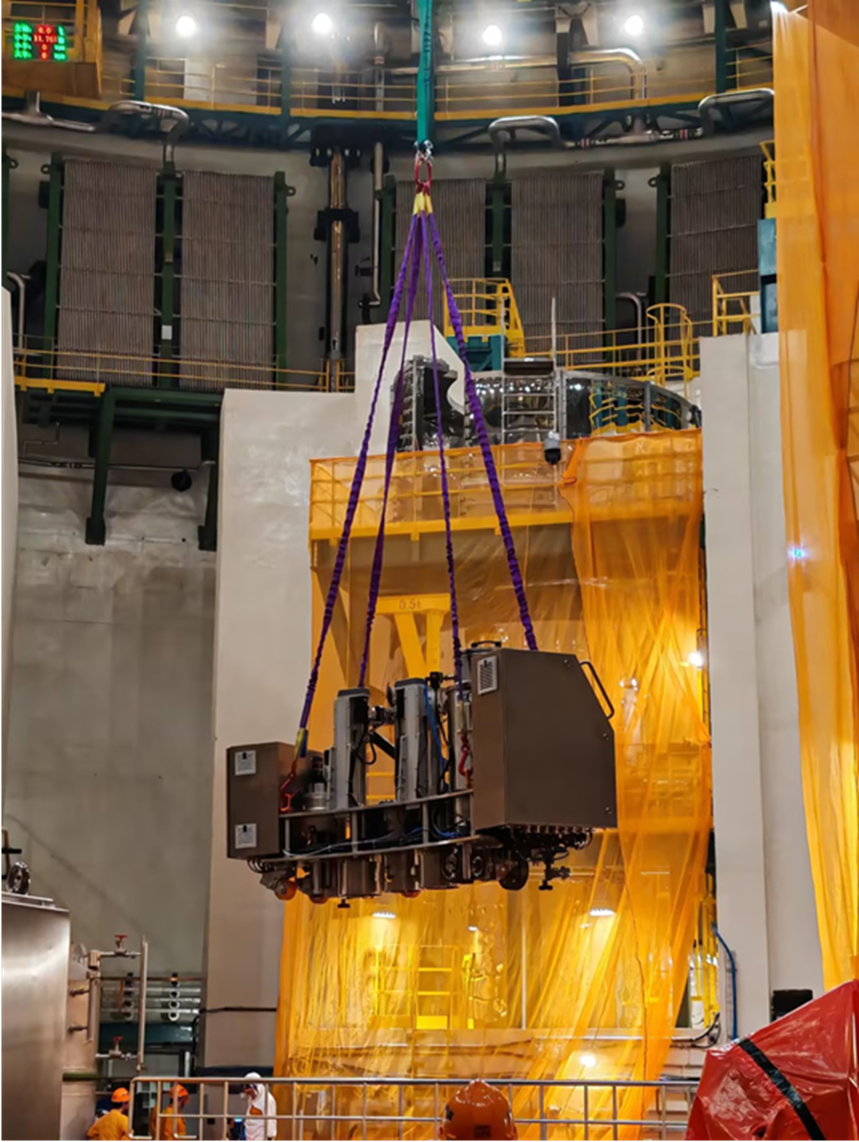
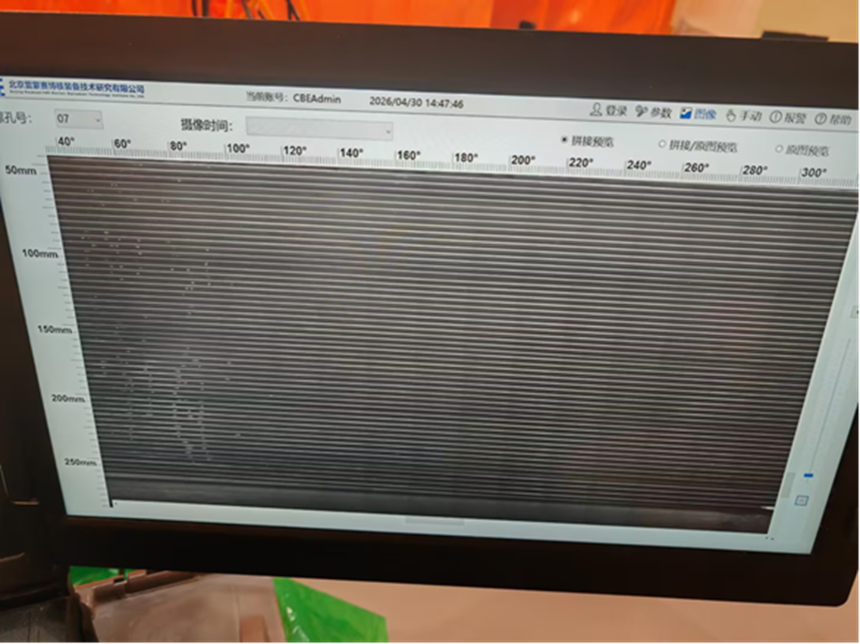
Meanwhile, Raymond-CBE's RPV main bolt hole cleaning robot also performed excellently during this overhaul. This equipment is specifically designed for cleaning and inspecting reactor pressure vessel main bolt holes in nuclear power plants, aiming to overcome the pain points of traditional manual cleaning, including cumulative radiation exposure to personnel, high labor intensity, and inconsistent cleaning quality. During the Zhangzhou Nuclear Power Plant Unit 101 overhaul, the equipment automatically completed cleaning, drying, polishing, and visual inspection according to a programmed process, requiring no personnel intervention throughout. It employs an orthogonal-axis profiling brush cleaning head combined with a wet cleaning process, improving cleaning efficiency while effectively reducing the risk of thread damage. At the same time, the equipment can capture images online in real time and output thread development images to the host computer interface, helping maintenance personnel accurately identify thread defects.
This image shows the thread development image of the main bolt hole after cleaning, which helps maintenance personnel accurately identify thread defects. The successful application in the Zhangzhou Nuclear Power Plant Unit 101 overhaul has fully validated the stability, safety, and efficiency of Raymond-CBE's two cleaning robot systems under real operating conditions. Engineering application demonstrates that these two pieces of equipment can not only significantly reduce the radiation exposure risk and labor intensity of maintenance personnel but also provide a reliable technical pathway for the intelligent and standardized maintenance of nuclear power plant reactor pressure vessels, offering promising prospects for widespread adoption. |